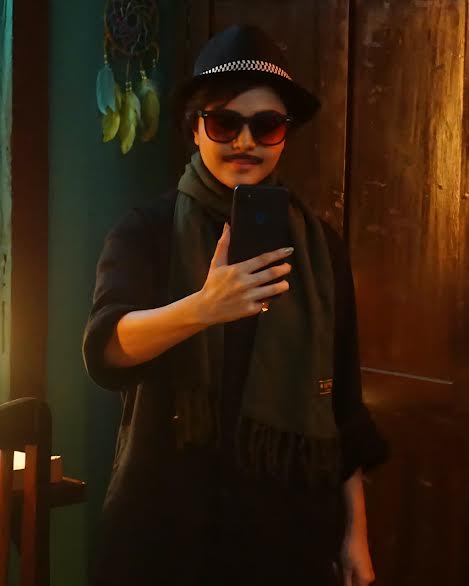
Mumbai: Priyamvada Kant has carved a distinctive space for herself in Indian television through performances that have moved comfortably between comedy, drama, mythology, family stories and contemporary characters. From the reality-show spotlight of Splitsvilla to the much-loved historical comedy Tenali Rama, and from Yeh Rishta Kya Kehlata Hai and Sasural Simar Ka to Santoshi Maa and Tera Mera Saath Rahe, her journey reflects an actor willing to explore rather than be confined by a particular image.
A trained classical dancer, Kant entered acting without a formal acting background and gradually built her craft through experience, observation and a willingness to take on varied roles. Her portrayal of Sharda in Tenali Rama remains particularly close to her heart, while winning Splitsvilla opened the door to a younger and very different audience.

Beyond the screen, Kant has explored dance, writing and other creative pursuits, embracing each as another way of evolving as an artist. She speaks candidly about the realities of television—the demanding schedules, uncertainty and pressure—while emphasising discipline, resilience and emotional well-being. She also believes the expanding television, OTT, film, theatre and digital ecosystem is creating exciting possibilities for performers.
In this exclusive conversation, Priyamvada Kant looks back at the roles that shaped her, the lessons she has learned, the importance of staying grounded and the kind of characters she hopes to bring to life next.
Q. You’ve built an impressive career across popular shows like Tenali Rama, Ghar Wali Ped Wali, Yeh Rishta Kya Kehlata Hai, Sasural Simar Ka, Santoshi Maa and Tera Mera Saath Rahe. Looking back, which role or project has been the most transformative for you as an actress, and why?
Priyamvada Kant: I think every project has played a different role in shaping me, but Tenali Rama and Splitsvilla were definitely major turning points in different ways. Tenali Rama gave me Sharda, which is still one of the characters closest to my heart. She was intelligent, warm, funny and had a very strong personality, and the show allowed me to explore comedy, emotion and even action. More importantly, it reached audiences who perhaps hadn’t seen my earlier work.
Splitsvilla, on the other hand, introduced me to people in a completely different space. So, if I look at my journey as a whole, both experiences expanded my audience and also made me more confident about taking risks.
Q. Winning Splitsvilla was a major milestone that brought you significant visibility. How did that experience shape your approach to television and the opportunities that followed?
Priyamvada Kant: Splitsvilla was a very unexpected and beautiful chapter in my life. I didn’t go into it thinking that it would change my career in such a big way. The experience taught me a lot about people, relationships and human psychology, because you’re constantly observing how different people react under pressure.
Winning was obviously a huge moment, but what stayed with me more was everything I learnt during the journey. It also introduced me to a younger audience and showed me that I could connect with people outside the conventional television space. After that, I became more open to experimenting and saying yes to things that were different from what I’d done before.
Q. In Tenali Rama, you were part of a beloved historical comedy. What was the most enjoyable or challenging aspect of working on that show, and how did the ensemble cast influence your performance?
Priyamvada Kant: Tenali Rama was a very special experience because the entire atmosphere on set was so lively. Sharda was a character with a lot of innocence, intelligence and spirit, so there was a lot to play with.
Comedy is actually quite challenging because timing is everything. You have to know when to hold a reaction, when to pause and when to let a moment breathe. Working with such a strong ensemble also helped because everyone’s energy feeds into your performance. You learn to listen and react rather than simply waiting for your own dialogue. That’s something I really carried forward from the show.
Q. Yeh Rishta Kya Kehlata Hai has a massive loyal audience. Can you share what it was like stepping into that world and how you prepared for your character there?
Priyamvada Kant: It was honestly an honour because Yeh Rishta Kya Kehlata Hai has such a long and loyal relationship with its audience. When you enter a show like that, you understand that people already have a deep emotional connection with the world and its characters.
I played Rhea, and what I enjoyed was that the character also gave me a different look and a slightly different shade from some of the things I’d done before. The entire team was extremely welcoming. Everyone who joins that set becomes part of the larger family, and I really felt that warmth.
Q. You’ve portrayed a range of characters—from mythological and family-oriented roles in Santoshi Maa and Sasural Simar Ka to more contemporary ones. How do you approach the process of transforming into such different personalities?
Priyamvada Kant: For me, the biggest thing is to not judge the character. Even if the character is doing something that I personally wouldn’t do, I have to understand why she thinks that way.
I start with the script and then try to understand the character’s emotional world—her background, relationships, insecurities, strengths and what motivates her. The external transformation—costume, hair, makeup, body language—is important, but I think the real transformation happens internally. Once you understand the person you’re playing, the physical aspects become much easier.
Q. Television often involves long shooting hours and intense schedules. What has been one of the biggest challenges you’ve faced on set, and how did you overcome it?
Priyamvada Kant: The hours can definitely be demanding. There are days when you’re shooting continuously and your body is tired but you still have to deliver emotionally, especially if the scene requires a lot of energy.
I’ve learnt to listen to my body and mind. Dance and yoga have helped me enormously in that respect. I also try not to carry the stress of one day into the next. You have to learn to switch off when you’re not shooting, otherwise the work can consume you.


Q. Is there a particular scene, moment, or fan interaction from any of your projects that still stands out as especially memorable or emotional for you?
Priyamvada Kant: For me, one of the most rewarding things is when people remember a character rather than just remembering my face. Sharda is a great example of that. Even today, people come up to me and talk about her with so much affection.
That’s when you realise that the work has actually travelled beyond the screen. As an actor, you spend so much time creating a character, and when someone tells you that the character made them laugh, feel something or become part of their memories, that’s incredibly special.
Q. How has your journey in the industry evolved from your earlier work to the present? What lessons about craft, resilience, or the business side of acting have stayed with you the most?
Priyamvada Kant: When I started, I was very much learning on the job. I was a trained classical dancer, but I didn’t come into acting with a formal acting background. My first show happened quite suddenly, and I learnt so much simply by being on set and working with people who were more experienced than me.
Over the years, I’ve understood that talent is only one part of this profession. You need patience, discipline and resilience because this is an industry of uncertainty. There will be periods when you’re working constantly and periods when you’re waiting. You have to learn not to attach your self-worth to either situation.
I’ve also realised that you have to keep evolving. Acting, writing, dancing, creating—I’ve explored different sides of myself because I don’t want to stop growing.
Q. Balancing personal life with the demands of a full-time television career can be demanding. How do you recharge and maintain that balance when the schedules get hectic?
Priyamvada Kant: Dance has always been a big part of my life, so that’s something I naturally return to. Yoga and meditation also help me stay grounded. Sometimes recharging doesn’t mean doing something elaborate; it can simply mean spending time with family, taking a walk, eating good food or just having a quiet day.
I’ve also learnt that it’s okay to slow down when you need to. I took a break at one point in my career when I was dealing with the loss of my father. That period taught me that personal healing is important too. You can’t always keep running just because the industry is moving.
Q. The Indian television landscape has changed a lot in recent years with OTT platforms and evolving storytelling. What trends or shifts in the industry excite you the most right now?
Priyamvada Kant: I love the fact that there are more avenues for actors today. Television, OTT, films, theatre and digital content can all coexist, and that gives performers more opportunities to experiment.
What’s particularly exciting for me is the variety in storytelling. Audiences are willing to watch different kinds of characters and genres now. As an actor, that’s wonderful because you’re not necessarily limited to one image. You can play a completely different person in your next project and the audience is willing to come along with you.
Q. Looking ahead, what kinds of roles or projects are you most eager to explore—whether on television, digital platforms, or elsewhere? Are there any specific genres or character types you’d love to try?
Priyamvada Kant: I’d really like to keep surprising myself. I’m interested in characters that are layered and not immediately predictable. Psychological thrillers really excite me, and I’d also love to do a strong historical drama.
At the same time, I don’t want to restrict myself to one medium. If there’s a good story and a character that makes me think, “I’ve never done this before,” that’s something I’d want to explore—whether it’s television, OTT, film or even theatre.
Q. For aspiring actors who look up to your body of work, what advice would you give about building a sustainable career in this industry while staying true to themselves?
Priyamvada Kant: I would say, first of all, don’t be in a hurry. Everyone’s journey looks different. You can’t compare your chapter one with somebody else’s chapter ten.
Work hard, learn your craft and be prepared for rejection because rejection is part of the profession. Also, don’t let one successful project convince you that you’ve figured everything out, and don’t let one failure convince you that you’re not good enough.
Stay curious and keep learning. For me, discipline has always been very important because of my classical dance training. My teachers taught me that hard work and patience are ultimately more dependable than luck. And perhaps most importantly, stay true to who you are. The industry may tell you what is fashionable at a particular moment, but your individuality is what will sustain you in the long run.












 https://www.youtube.com/watch?si=RtToJsBhYBatUrym&v=mOuYNSdhjHA&feature=youtu.be